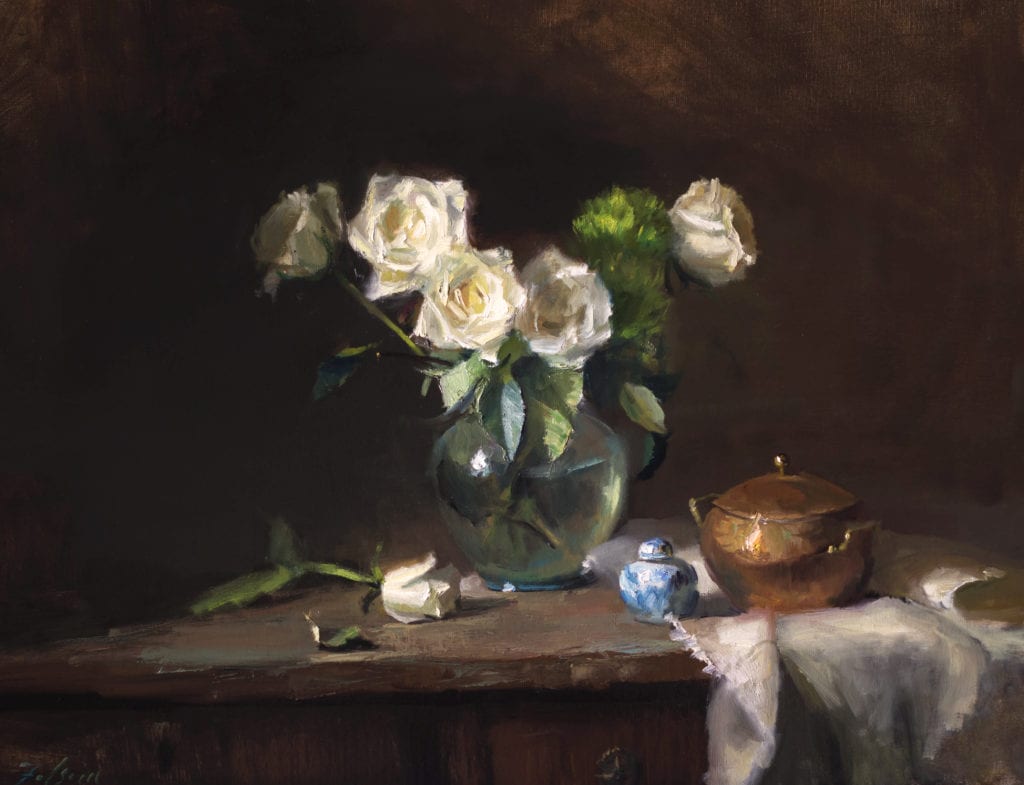
by Kelli Folsom
At the time I was exhausted, feeling stagnate getting burned out. Part of my exhaustion was due to overworking, teaching too much and primarily doing some teaching that was not a good fit for me at a local University for two semesters which was leaving me with strained studio time. So as I was doing my usual digging on the internet for new ideas, I wound up stumbling upon someone’s blog…. don’t remember whose now, you know how that goes. She gave a long list of resources some of which I had read and just weren’t for me and at the end, she mentioned this program called the 100 Day Challenge. I went and checked out the site and listened to some interviews with the creator on YouTube. I felt this instinct saying, “you need to try this.”
The Challenge started before tax time and before my 2nd semester of teaching was over. “Not exactly the right time since I’m totally frazzled,” I thought. Excuses, excuses…here they came. The second excuse: it costs $200. A third excuse: this is just motivational hype…. and more and more fear, panic and what will people think of me bull hockey. So, I signed up. I thought, what’s the worst that can happen? I lose $200. What’s the best that can happen? I learn some powerful lessons that actually change the course of things. BINGO. SIGN ME UP.
I signed up and kept it secret for quite a while afraid of judgments against it. Now that it is over I can happily report that it was an incredible experience – not easy, but incredible. Therefore, I STRONGLY recommend the program to anyone who wants to see some changes in their life – in any area. This is not just for artists or entrepreneurs; it’s for everyone. It’s not just to make money or lose weight; it can be for developing mindfulness or spending more time with your family or any area in which you would like to see dramatic growth. The program is designed to walk you through any goal and keep you motivated while working on it. You are the one that makes it happen though, by taking action and following through. So now I will share what my particular goal and experience was.
Disclosure: If you have weird beliefs about making money or are too much of an idealist and think that you should be a starving artist, READ NO FURTHER.
My goal happened to be a painting sales goal. I wanted the fulfillment of selling more of my work. I mean, after all, that’s part of why I’m making it right? The program encouraged you to set a big goal, to be clear on what you wanted. I already knew what my ultimate goal was for a yearly salary, but it always seemed so far off in the future, and I always thought, “Hey, what control do I have over whether or not people want to buy my paintings?” and “I have my work in galleries across the country, and I’m doing everything I know how to do otherwise to make an income.” Other thoughts included, “Geez, I hate marketing stuff. I don’t want to be a sleaze-ball salesman. It should be about the art. People will judge me for being superficial and caring about money.” (Insert dramatic eye roll) The truth was that I knew there had to be some other ideas or options and I already knew I was putting off a lot of things that would improve my circumstances. Although I was at the point of burn-out, I felt there was no better time than this when I’m sick of my current results and needing to re-focus.
So I set a big goal. Since the challenge was 100 days – roughly three months, my goal was 1/4 of what my eventual hopeful income will be … which just happened to be more painting sales income than I made all of last year! I thought wow, this will be darn near impossible. But I started the program with such excitement anyway, not with doubts, determined to give it everything I had. The daily videos from the 100 Day Challenge kept me focused on how to reach my goal; on days that I was sinking back into comfort zone or wanting to give up, the program kept the flame lit until I could see some more results. Halfway through the 100 days I had made more than 60% of my goal. I was so elated! Then the plateau came and all the doubts that came with it. The next 2 weeks (I know, long time right?) I saw very few results ….and started to think this was all I was going to be able to do. I became tired of trying, so there were a few days that I put out very little effort and felt bummed. I realized I didn’t want to end like that; I would rather not reach the goal, doing everything I could, than not reach it and wonder if I had really given it my best shot.
By the end, I am happy to report that I reached 95% of my goal! The goal was not simply about the money; it was about doing what I needed to do instead of blaming others and feeling powerless for what income wasn’t coming in. I took back responsibility and in turn felt more powerful and in control (not in control of the outcome mind you, but of my own actions and mind).
Here are the most practical applications I learned during the challenge:
1. IDENTIFY GOALS.
Understand WHY you want to achieve them. What will that success look and feel like?
2. BRAINSTORM.
Brainstorm ways that you can reach these goals. Just take a piece of paper and start righting down ANY idea that comes to mind…don’t judge it or say that’s a stupid idea. You probably already know lots of things you can do to help reach your goal, but if needed, then do some research. But be careful, as research can often become a form of procrastination.
3. PLAN YOUR ATTACK.
Set quarterly, monthly, daily, weekly, even hourly ways to reach your goal and keep track of which goals you meet. The biggest thing that helped me once I had a list of brainstorm ideas and actions was to plan out my day in 30 MINUTE SEGMENTS. Yep, 30 minutes. This level of attention was a life changer for me.
4. PRIORITIZE.
Sometimes, I have so many little things do that I’ll do those all day and have no energy left for the very important stuff. I mean, I’m an artist, not a housekeeper, people. What is going to move you closest to your goal the fastest? Take action on these first! You can’t get around some daily to-do’s… like food…we do need that to survive. Do them last, do them first, I don’t care…just do them fast and only the ones that HAVE to be done. Are there things you can hire out? Automate? Or not do at all?
5. FOLLOW THROUGH.
These were things I had been putting off because I just dreaded doing them, like computer stuff or spending money on advertising. OUCH. Now, I realize just how little time they actually took once I took action and how painless it was. BIG RESULTS on both of these, by the way. Also, there is no bigger self-esteem booster (in my opinion) than doing things that you have been procrastinating for two years. Yep, that’s right. You heard me. Two years. (Sigh)
6. RECOGNIZE YOUR HUMAN-NESS.
You’re gonna have days that you want to give up and quit. It’s okay. Go back to your Why’s on your goals. Think about how you’re gonna feel having reached them and take a day off! The program actually reminds you constantly of how important self-care is, that you are well rested, well fed, spending time in nature and with loved ones. You actually perform better and new ideas come to you when you do this. But when you rest, rest. Don’t be anxious that you don’t have your nose to the grindstone.
7. DO SCARY AND NEW THINGS.
Execute the ideas that scare you the most and the ideas that you’ve never tried. Be open to new ways of reaching your goal. We tend to follow what’s modeled for us. I mean, you only know what you know how to do, right? Wrong. Open up to other ways, look for other options and question previous beliefs. One thing that happened to me was that I started getting requests for commissions just out of nowhere. I’ve rarely done commissions before, and I didn’t care for it when I did, but I was open and said YES. The commissions brought in 30% of my sales goal, I had no conflict with the clients, and I enjoyed doing the paintings.
There are people out there who will never need something like this. They’re just cool how they are. I wish I could be that way, but darn it, Jim, I need some help sometimes. I don’t get anything from the 100 Day Challenge for sharing this information with you, but I was so happy with my experience I wanted to share it in hopes that it might help someone else, however needed.
Check it out here: www.100daychallenge.com
Success
5 Stages of Painting
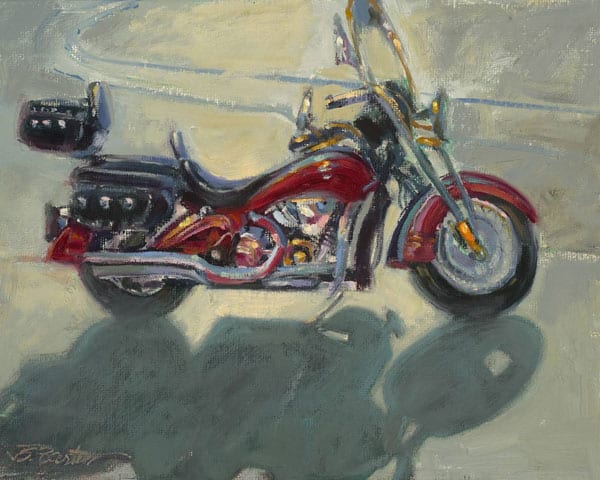
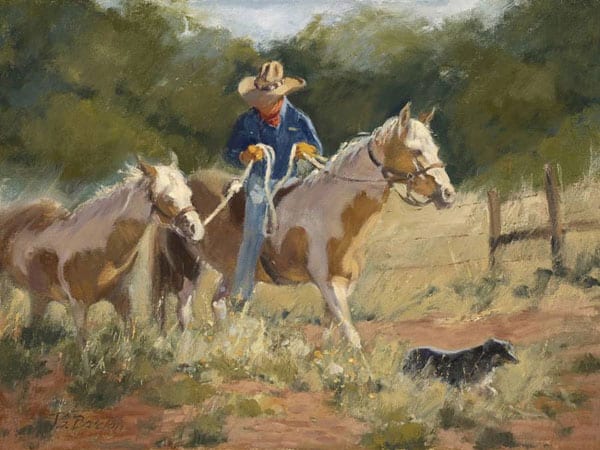
I was teaching in my studio recently and glanced at the bulletin board that I’ve loaded with sketches, ideas and quotes. I had written down the 5 stages of grief at some point and laughed (yes, laughed) at how the same list applies to the work of an artist. If you are an artist I think you’ll be able to relate to this. If you’re a collector, this will give you some idea of how hard our work can be, but you also might find the list applies to your own work, whatever that may be. And, as in life, these stages don’t just run their course and then “you’re done.” They keep repeating. And we keep trying to paint that perfect painting. All artists have a studio full of paintings that will never see the light of a show, but the ones that work make it all worth while!
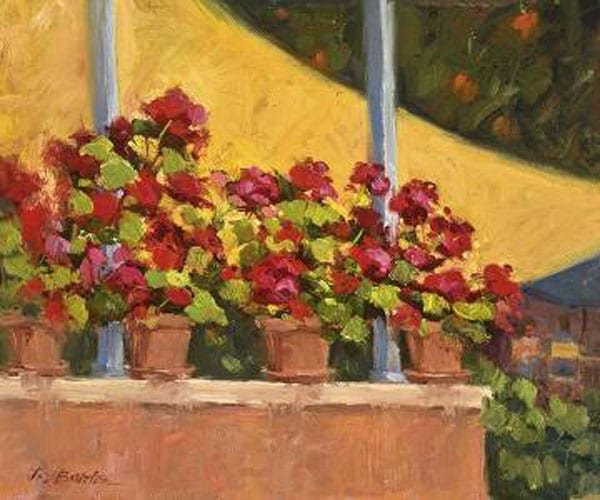
Here’s an idea of what these stages mean to me:
Denial: This is not bad…not the painting I had in my head when I started…but maybe this will work…
Anger: Why isn’t this working? Why can’t I find that color? Why can’t I draw a horse?
Bargaining: OK, if you (the Art God?) just let me get this one painting done in time for the show, I promise I’ll clean up my studio and give up popcorn…and maybe ice cream.
Depression: This is never going to work. What made me think I could paint?
Acceptance: Well, this is not bad. This is going to work for now and the next one will be even better. I hope. I just have to keep working at it and I will get as close as I can before I die.
Repeat 5 stages of Painting. Order may be shuffled as needed.
Good Luck! And don’t give up!
Challenging Painter's Block
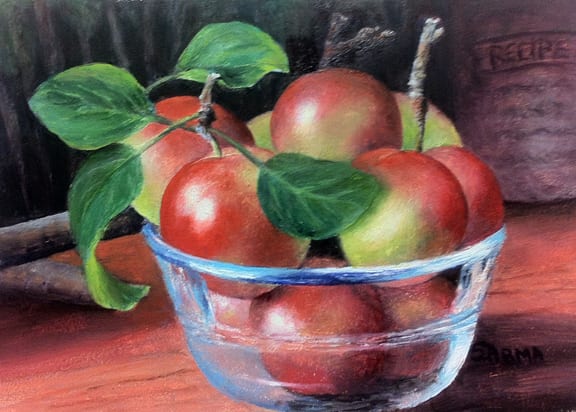
1. Paint your favorite drink – whether it’s a cup of tea, a pina colada, a steaming latte with lots of foam, or an ice cold beer – paint it in such a way that would show the viewer why it’s your favorite and how much you love it.
2. Go through the newspaper and find a photo – the first one that catches your eye – and paint your version of it – it could be abstract, realistic, finger-painted, or painted any way that might get your creative juices flowing for the next project.
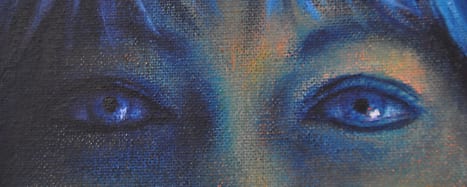
4. Paint yourself as a person with the occupation you wanted as a child – did you want to be a fireman, a hairdresser, a bungee jumper, a police officer, a dancer? Give yourself a day as the person of your childhood dreams.
5. Do you love spaghetti? Eggs benedict? Chocolate Mousse? Strawberries? Your secret recipe? Paint it so everyone can taste it with you.
6. Repaint the first thing you ever painted. Just knowing that you now have a greater technical knowledge will help you paint that image with confidence.
7. Paint your worst habit – do you smoke, drink, eat too much chocolate? Paint in a way that will show how bad this habit is. Perhaps your painting, over time, will actually even help you quit your habit – if you even want to.
8. Paint about conformity – peas in a pod, ducks in a row, bananas in a bunch, etc. Make sure that part of your group doesn’t conform – for instance, leave one of the peas out of the pod.
9. Paint yours or your child’s favorite toy. Show some of the worn areas that clearly display how much it has been loved.
10. If you’re really hoping for some particular thing in life – paint it – maybe a cottage at the lake? A diamond ring? A new tool box? A particular make and model of vehicle? A child? Live your dreams through your painting.
Remember that at one time you only dreamed you could paint – now you truly can paint your dreams. Just make those first strokes that will put you back on your way – you can do it – you just need a little motivation. Hopefully you’ll find it here.
© Copyright · Susan Abma
Inspiration And Motivation: The Prelude To Success
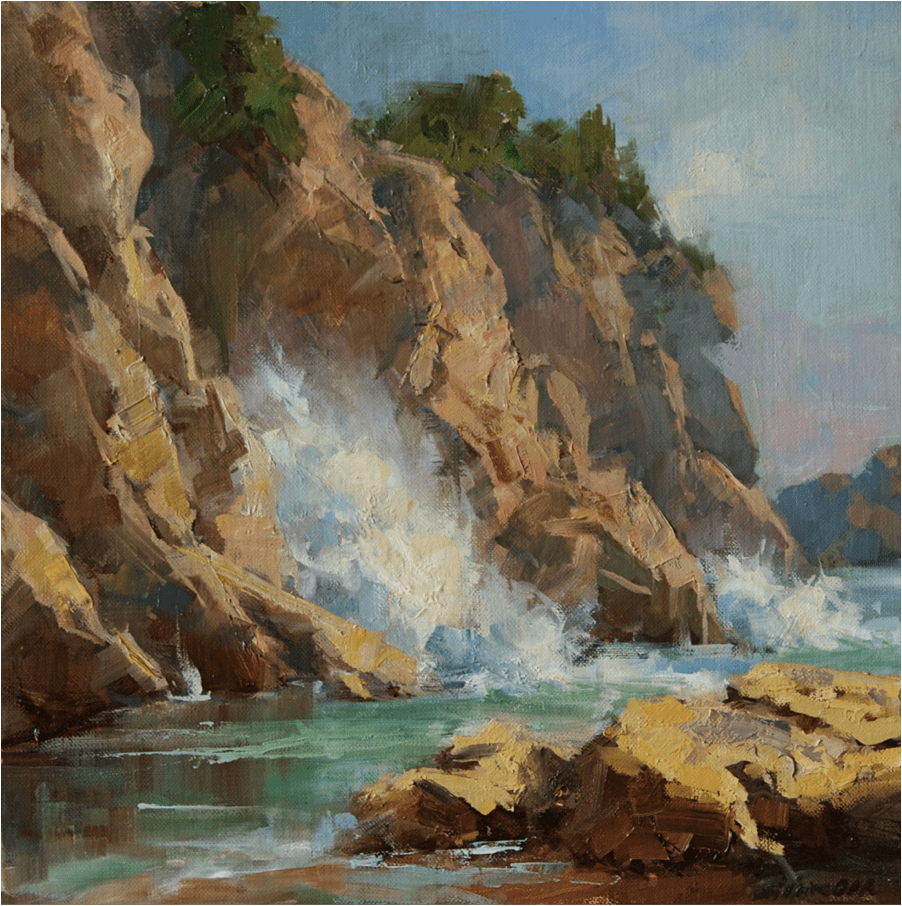
We all want to achieve at a very high level and create the next great piece of art. Recent psychological studies have determined happier people are generally more successful.
“Happiness is the meaning and purpose of life, the whole aim and end of human existence” -Aristotle
It bears to reason that we all will paint more often and better if we are inspired, motivated and happy.
My favorite two questions for my workshop artists are:
- What do you love to paint? And
- How would you love for your paintings to look?
I am fortunate to get to teach pleasant artists in my workshops, thanks to all of you. Over the years it has become obvious the number one reason for people not achieving better paintings faster or even painting at their very best is they get discouraged, blame themselves or lose their bliss along the way.
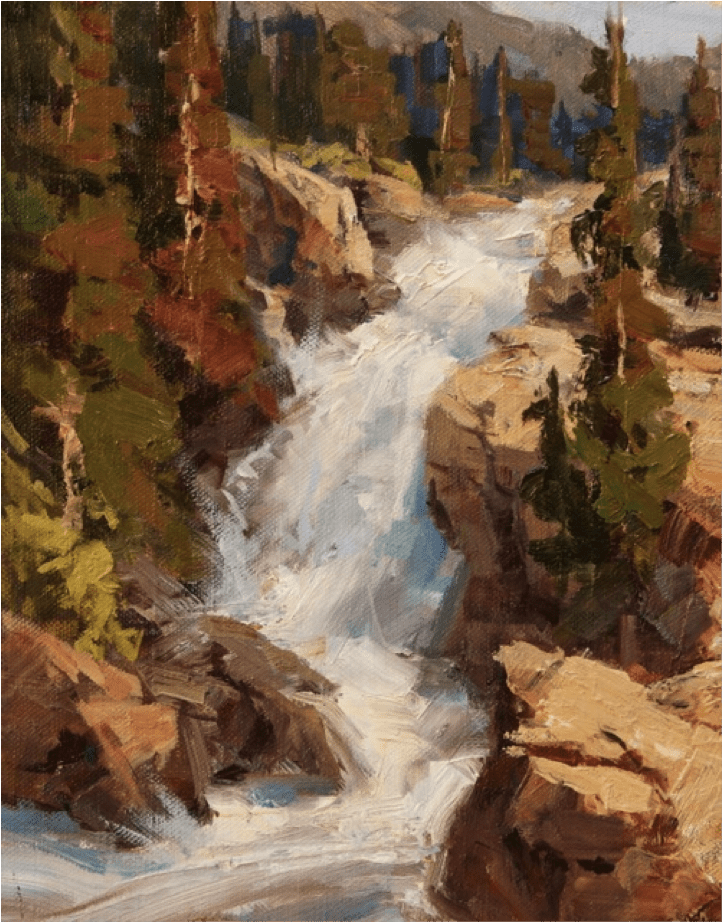
When you are unmotivated, don’t ask yourself what the world needs or what would sell, “ask yourself what makes you come alive and then go do that. Because what the world needs is people who have come alive” – Dr. Howard Thurman
So why not learn from a few notables who have achieved extraordinary success.
I love the comments of, I believe, Everett Raymond Kinstler in one of his videos:
“I start out in this way thinking, ‘this will be the greatest painting of this subject matter ever painted.’ Later in the process I think, ‘this will be the greatest painting of this subject matter I ever painted,’ and finally I think, ‘Hell! I hope I can save this painting!’ [paraphrased]”
Doesn’t this help you chuckle at yourself and free you?
When Richard Schmidt was asked he stated,
“I just paint. I don’t consider my place in history. And don’t blame yourself when something goes wrong. Just learn what you did wrong and don’t do it again. [paraphrased]”
I appreciate Scott Christensen for his help along the way and his piece of advice: “always paint for yourself.” We should always remember this when we are watching others sell a certain genre or style that does not ring true to who we really are.
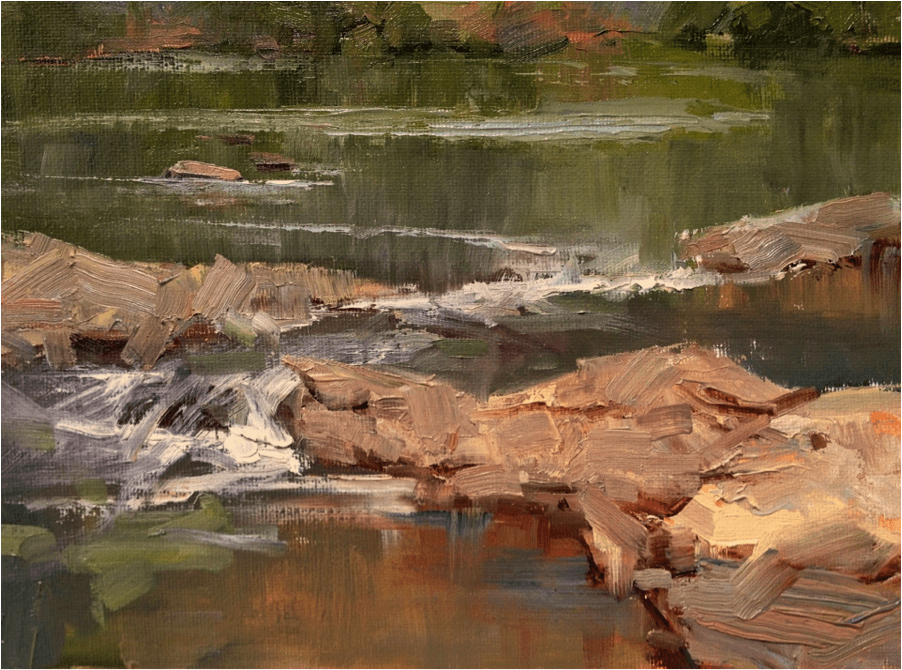
Most representational artists know strong abstract design underlies every piece of representational art, and values are the bones. So interesting shapes and design, held in unity by values, are the backbones of all good paintings. The process for being accepted in OPA shows is very fair and when looking at 2000 or so paintings it becomes real obvious how much the above statement is true.
At higher levels most artists are painting spots of color and value and not objects. Painters say a great painting is greater than its sum of its’ parts. The only way that can be achieved is to paint from the heart, for all really great art is created from the heart.
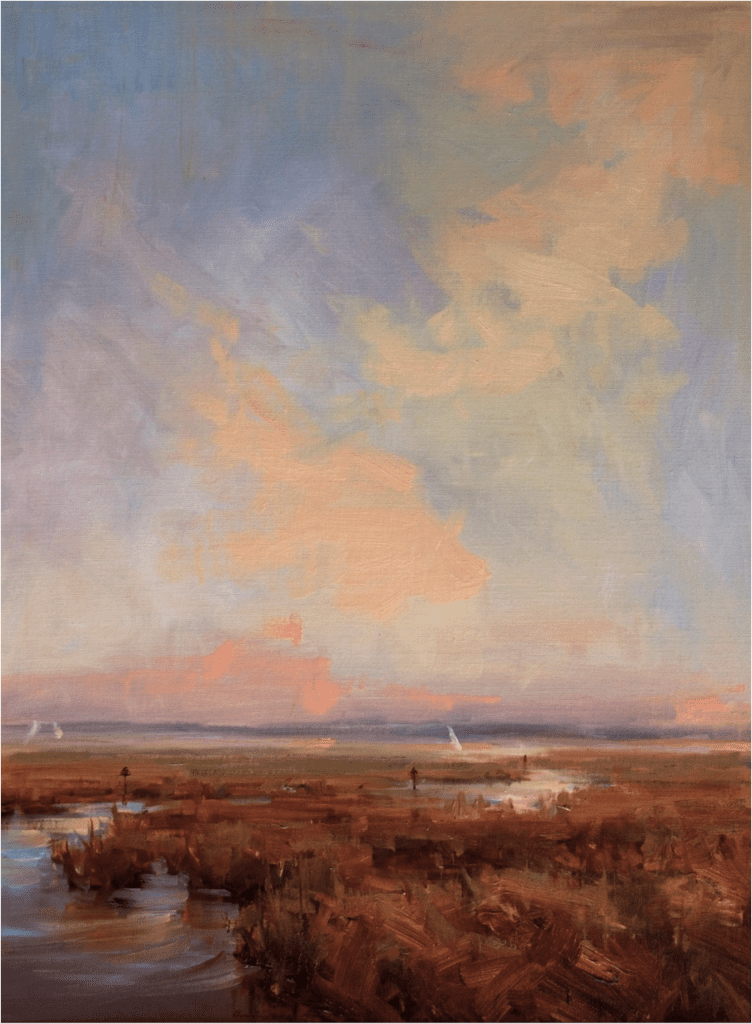
Perhaps if we all stay more motivated we will all create better art and most importantly enjoy the process more. This is always something I confess to have to be aware of — because as a past lawyer that only focused on results, and now a reformed artist — nothing is clearer to me than that, if the process is enjoyable, I will paint more often and better.
I find that artists are generally humble, share freely and are kind to one another. I consider myself lucky to have found such a great group of people and friends. I think it important that we, as artists, always share what we know. It is often so hard to paint good paintings, so we all need the fresh eyes and keen advice of other artists — as our friends and colleagues. I encourage you to celebrate the awards and excellent paintings of your fellow artists — that’s what makes being an artist really enjoyable. Hope to see you soon, whether in nature or at a show.
The Art of Survival in the Survival of Art
 Since the Great Recession hit, most artists have been impacted. Collectors cut back on luxury items and art is at the top of the list. Workshop enrollment is down as well, and if you teach a lot of workshops that can be a big impact. Some artists have taken on part-time teaching as a steady gig. Doing a couple of day’s part time teaching is fine, but if you go full time it may really impact your studio time.
As an illustrator for many years I learned very fast how to hustle if I was going to pay my bills. Self-promotion was a constant thing even with an agent. Making new contacts in the Illustration world was a constant thing. Tailoring my art to the Illustration market was not much different than the fine art field. However, the fine art has allowed me to paint what moves me and still be able to sell. The last two years I have transitioned into all gallery work, which means every painting I produce is spec. So now I am trying to use what I’ve learned in the commercial world, into the fine art world. Not all of it overlaps but the business practice does.
 I try to do all E-mail correspondence, phone calls, and all other loose ends before 10am and then I will have an open block of time in the studio where I can think about the painting process and not a little thing in the back of my mind. If I want to contact a gallery by phone I will have to do it after 11am, if an email won’t work. At night I might go back into the studio to touch up a little, but mostly I plan for the coming months. Keeping steady workshops planned is difficult, but you can spread them out over the year. Teaching is great way to verbalize your approach and can be a great learning experience for you as well as the student. If the area you are in during the workshop has some great scenery, take advantage and paint it or photograph it on your free time.
I keep a studio calendar list of all my upcoming workshops, shows and paint outs so I don’t lose track of opportunities. Knowing when an important show is coming up will give you more time to set aside your “show pieces”. It’s always a tough thing to do a good painting that will sell and set it aside for the shows. Choosing my own painting for a show is sometimes hard for me, so I might post it on Face Book or have some artist friends over to get a reaction that will help me in judging the right painting for an upcoming exhibition.
Recently, I have been rethinking my framing and expanding my choices. I have about four frames that I use all the time and they look great on almost everything, but sometimes having a half dozen other choices might be the difference for a Collector riding the fence. I learned early in my career that a bad frame can kill a good painting. Let’s face it; it’s the package for your product. I was in a show at The National Arts Club years ago, and that year Everett Raymond Kinstler won best in show for a stunning painting and an equally beautiful frame. When the show came down and I picked up my art, one of the curators of the show told me my painting was very well done, but the frame made it look amateurish. He was right. Looking around at the other paintings with beautiful wide gallery frames made an impact on me.
 As an artist, I am not the best business person, but have learned a lot over the years in order to survive in an extremely up and down market. Some of my artist friends have taught me a great deal about good business and I have been able to use some their advice. When you sell a painting at a gallery make sure you can follow up with another piece to replace the sold painting. If there is a blank space on the wall, it will get filled with another artist’s work.
The last element in our survival in Art is the psychological aspect. Artists, I think tend to be a little insecure because of the volatile nature of the business. If we don’t sell a painting in a month we second guess the subject matter we paint and everything else. Having the right frame of mind is essential in creating our best art and succeeding. The illustration field taught me to have a thick skin because one day maybe a diamond and the next a rock. An artist’s ego can be a dangerous thing. Win an award, be happy for a couple of days, and then put your ribbon away. Living in a good environment surrounded by loving family and friends , will always be a solid foundation during the bumpy ride in Art.