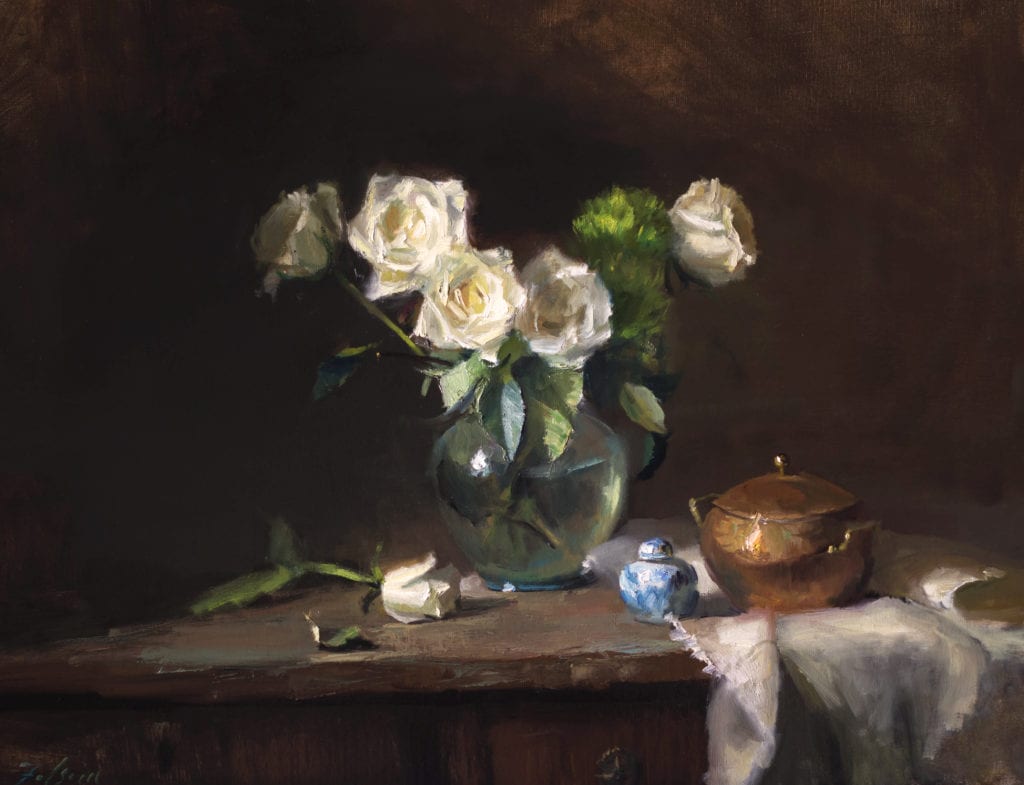
by Kelli Folsom
At the time I was exhausted, feeling stagnate getting burned out. Part of my exhaustion was due to overworking, teaching too much and primarily doing some teaching that was not a good fit for me at a local University for two semesters which was leaving me with strained studio time. So as I was doing my usual digging on the internet for new ideas, I wound up stumbling upon someone’s blog…. don’t remember whose now, you know how that goes. She gave a long list of resources some of which I had read and just weren’t for me and at the end, she mentioned this program called the 100 Day Challenge. I went and checked out the site and listened to some interviews with the creator on YouTube. I felt this instinct saying, “you need to try this.”
The Challenge started before tax time and before my 2nd semester of teaching was over. “Not exactly the right time since I’m totally frazzled,” I thought. Excuses, excuses…here they came. The second excuse: it costs $200. A third excuse: this is just motivational hype…. and more and more fear, panic and what will people think of me bull hockey. So, I signed up. I thought, what’s the worst that can happen? I lose $200. What’s the best that can happen? I learn some powerful lessons that actually change the course of things. BINGO. SIGN ME UP.
I signed up and kept it secret for quite a while afraid of judgments against it. Now that it is over I can happily report that it was an incredible experience – not easy, but incredible. Therefore, I STRONGLY recommend the program to anyone who wants to see some changes in their life – in any area. This is not just for artists or entrepreneurs; it’s for everyone. It’s not just to make money or lose weight; it can be for developing mindfulness or spending more time with your family or any area in which you would like to see dramatic growth. The program is designed to walk you through any goal and keep you motivated while working on it. You are the one that makes it happen though, by taking action and following through. So now I will share what my particular goal and experience was.
Disclosure: If you have weird beliefs about making money or are too much of an idealist and think that you should be a starving artist, READ NO FURTHER.
My goal happened to be a painting sales goal. I wanted the fulfillment of selling more of my work. I mean, after all, that’s part of why I’m making it right? The program encouraged you to set a big goal, to be clear on what you wanted. I already knew what my ultimate goal was for a yearly salary, but it always seemed so far off in the future, and I always thought, “Hey, what control do I have over whether or not people want to buy my paintings?” and “I have my work in galleries across the country, and I’m doing everything I know how to do otherwise to make an income.” Other thoughts included, “Geez, I hate marketing stuff. I don’t want to be a sleaze-ball salesman. It should be about the art. People will judge me for being superficial and caring about money.” (Insert dramatic eye roll) The truth was that I knew there had to be some other ideas or options and I already knew I was putting off a lot of things that would improve my circumstances. Although I was at the point of burn-out, I felt there was no better time than this when I’m sick of my current results and needing to re-focus.
So I set a big goal. Since the challenge was 100 days – roughly three months, my goal was 1/4 of what my eventual hopeful income will be … which just happened to be more painting sales income than I made all of last year! I thought wow, this will be darn near impossible. But I started the program with such excitement anyway, not with doubts, determined to give it everything I had. The daily videos from the 100 Day Challenge kept me focused on how to reach my goal; on days that I was sinking back into comfort zone or wanting to give up, the program kept the flame lit until I could see some more results. Halfway through the 100 days I had made more than 60% of my goal. I was so elated! Then the plateau came and all the doubts that came with it. The next 2 weeks (I know, long time right?) I saw very few results ….and started to think this was all I was going to be able to do. I became tired of trying, so there were a few days that I put out very little effort and felt bummed. I realized I didn’t want to end like that; I would rather not reach the goal, doing everything I could, than not reach it and wonder if I had really given it my best shot.
By the end, I am happy to report that I reached 95% of my goal! The goal was not simply about the money; it was about doing what I needed to do instead of blaming others and feeling powerless for what income wasn’t coming in. I took back responsibility and in turn felt more powerful and in control (not in control of the outcome mind you, but of my own actions and mind).
Here are the most practical applications I learned during the challenge:
1. IDENTIFY GOALS.
Understand WHY you want to achieve them. What will that success look and feel like?
2. BRAINSTORM.
Brainstorm ways that you can reach these goals. Just take a piece of paper and start righting down ANY idea that comes to mind…don’t judge it or say that’s a stupid idea. You probably already know lots of things you can do to help reach your goal, but if needed, then do some research. But be careful, as research can often become a form of procrastination.
3. PLAN YOUR ATTACK.
Set quarterly, monthly, daily, weekly, even hourly ways to reach your goal and keep track of which goals you meet. The biggest thing that helped me once I had a list of brainstorm ideas and actions was to plan out my day in 30 MINUTE SEGMENTS. Yep, 30 minutes. This level of attention was a life changer for me.
4. PRIORITIZE.
Sometimes, I have so many little things do that I’ll do those all day and have no energy left for the very important stuff. I mean, I’m an artist, not a housekeeper, people. What is going to move you closest to your goal the fastest? Take action on these first! You can’t get around some daily to-do’s… like food…we do need that to survive. Do them last, do them first, I don’t care…just do them fast and only the ones that HAVE to be done. Are there things you can hire out? Automate? Or not do at all?
5. FOLLOW THROUGH.
These were things I had been putting off because I just dreaded doing them, like computer stuff or spending money on advertising. OUCH. Now, I realize just how little time they actually took once I took action and how painless it was. BIG RESULTS on both of these, by the way. Also, there is no bigger self-esteem booster (in my opinion) than doing things that you have been procrastinating for two years. Yep, that’s right. You heard me. Two years. (Sigh)
6. RECOGNIZE YOUR HUMAN-NESS.
You’re gonna have days that you want to give up and quit. It’s okay. Go back to your Why’s on your goals. Think about how you’re gonna feel having reached them and take a day off! The program actually reminds you constantly of how important self-care is, that you are well rested, well fed, spending time in nature and with loved ones. You actually perform better and new ideas come to you when you do this. But when you rest, rest. Don’t be anxious that you don’t have your nose to the grindstone.
7. DO SCARY AND NEW THINGS.
Execute the ideas that scare you the most and the ideas that you’ve never tried. Be open to new ways of reaching your goal. We tend to follow what’s modeled for us. I mean, you only know what you know how to do, right? Wrong. Open up to other ways, look for other options and question previous beliefs. One thing that happened to me was that I started getting requests for commissions just out of nowhere. I’ve rarely done commissions before, and I didn’t care for it when I did, but I was open and said YES. The commissions brought in 30% of my sales goal, I had no conflict with the clients, and I enjoyed doing the paintings.
There are people out there who will never need something like this. They’re just cool how they are. I wish I could be that way, but darn it, Jim, I need some help sometimes. I don’t get anything from the 100 Day Challenge for sharing this information with you, but I was so happy with my experience I wanted to share it in hopes that it might help someone else, however needed.
Check it out here: www.100daychallenge.com
Positive Thinking
What About Women In The Arts?
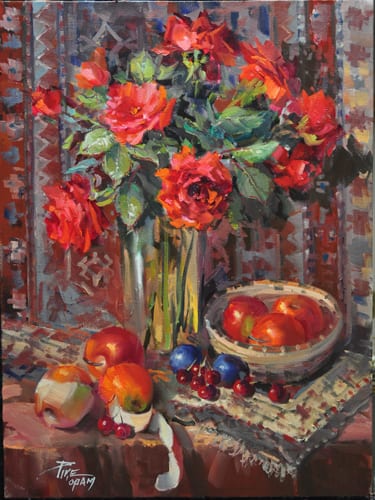
I should start by telling you how I did it. First of all, I picked one of the most respected artists and teachers in the Los Angeles area, Sergei Bongart. I was in my early twenties when I started studying with Sergei. He had a thick Russian accent. His education was also in Russia. He was considered one of the best artists and colorist. His bold brushwork was highly thought of.
In order to pay for my lessons, I had to find a way to make money. I had been trained in high school to do scenery for stage plays so I did murals for the great sum of $35 a wall. I could do them fast using a dry brush technique. At this time, you could buy groceries for a week with $35. I worked quickly using acrylic and water-based paint. I had two small boys not yet in school. My mom helped to watch them on days I had murals. I also worked at night, whenever possible, so my husband could babysit.
One of the greatest things that happened to me was meeting Hal Reed. Not only was he a great painter, but he was a knowledgeable teacher. Hal saw my talent. He worked with me giving me a good education. I taught for the Art League of Los Angeles, a highly respected school founded by Hal Reed. I taught there for many years with full classes. Hal was always searching for new horizons. He saw the need for video teaching. He started Art Video Productions. I was one of the six teachers used. Hal made over 100 tapes himself, and I made 52 tapes covering landscape, seascape, portrait, figure and floral.
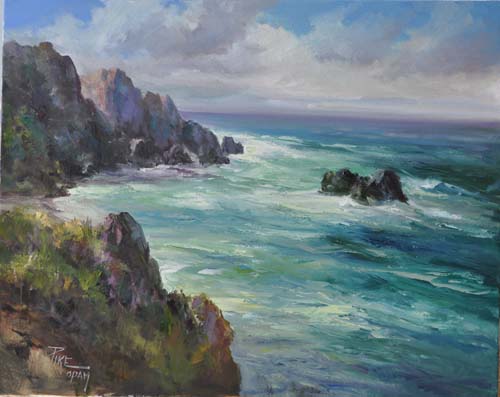
I also had several articles done by art magazines, Art of the West, International Artist, Southwest Art and The Artist’s Magazine. I worked with print companies such as Portal, Leaning Tree, Bentley House and Haddad and also a company in Great Britain.
My teaching took up most of my time. I worked for several schools. The two most important schools were Scottsdale Artists’ School and the Art League of Los Angeles. My teaching gave me little time to paint for galleries so I started doing traveling workshops. These took me all over the world. The good part about traveling workshops is they are done by the travel agencies. All I had to do was the teaching and enjoy the trip. When I started to produce paintings for galleries, I did well with thirteen galleries at one time.
This is only a part of what I did to achieve my art career. Most men get their education and go to commercial art to get started. Many then go to fulltime painting, leaving the commercial art world behind. Some women do the same. I couldn’t get my education first. I just didn’t have the money. I did it anyway; the hard way.
There are many great women artists out there who are alive today and many who did well that have passed on. The answer is talent. If you are good, that may be all it takes. We all know there have been many who were just lucky, not as talented but did it anyway.
What can an artist do about it?
It was one of the most violent terrorist acts on America’s soil in recent history, at the world’s oldest annual marathon. Thousands experienced it locally and firsthand, as the event traditionally draws over 500,000 spectators. Millions viewed it on TV, replayed in shocking detail on every major national network.
Film showed runners who had just completed the race running back into the course to help the injured. Police and first responders rushed to the aid of the wounded with blankets, gurneys, and medical assistance. Viewers at televisions across the nation could only sit or stand transfixed as they tried to comprehend the carnage of the innocents who had suffered the shrapnel of a death-dealing blow. In living rooms everywhere, far from the smoke and violence, we were unable to think, breathe, or even lift a hand, transfixed by the horror of an ultimately cruel attack.
I have had the privilege to run the Boston Marathon three times. The highlight, for me, was The Hundredth, or Centennial Boston Marathon in 1996, that set the record for the world’s largest marathon at 38,708 entrants and 35,868 finishers. It’s properly called the “Boston Athletic Association Marathon,” and is begun and run in cities largely outside Boston—in fact, runners don’t even see Boston until five miles after Heartbreak Hill, at 24.5 miles. In fact, in the early days of the marathon, what was printed on the finishers’ medals was the name, “the American Marathon.”
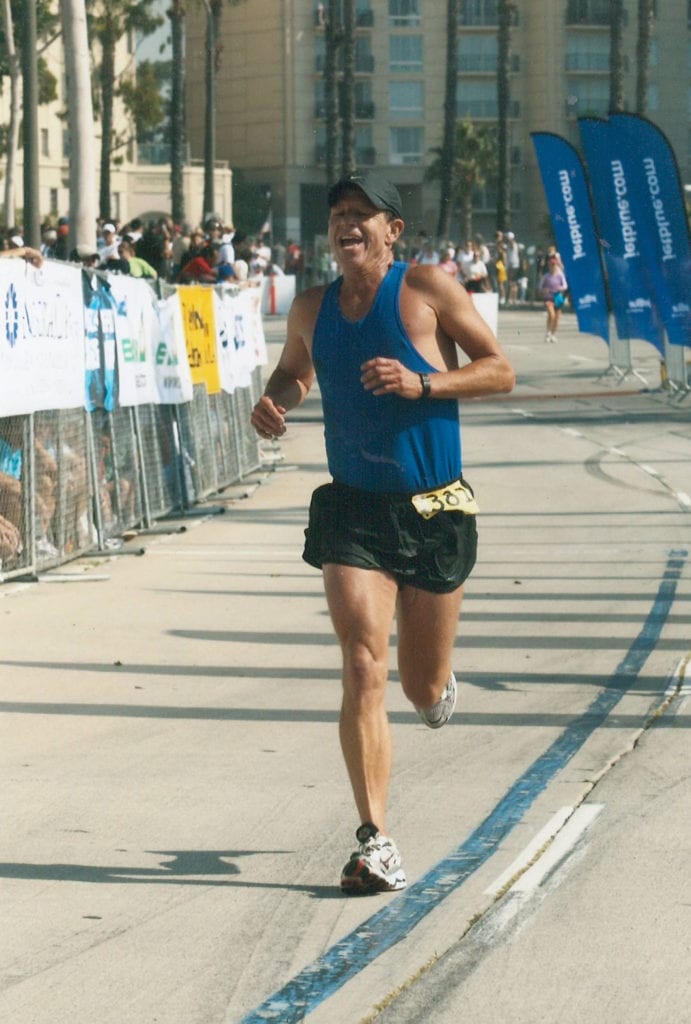
But there was to be no victory that day, April 15th, for those runners on their way to the finish line at 2:49 p.m…. even for those who were turning that final corner onto Boylston Street to finally realize their dreams of completing “the Boston.” The bombings destroyed those dreams of the finish line in the same instant that they devastated the crowds gathered around that line. It was hopeless to go back, to wish it hadn’t happened. Only one question remained: “What can we do now; what should we do?”
That brings it all the way back, to each one of us. As artists, what can we do in the face of this disaster, and others, that threaten to destroy even the survivors?…that threatens to overwhelm all the good that exists in society, in any works of man and art, and which is powerful enough to reduce our creative morale to rubble?…so powerful that we might ultimately consider that the arts are nothing in the face of real evil, and that the artist and his/her artwork has “head in the clouds,” and is standing in front of tragedy without real weapons, or even an answer to man’s inhumanity to man.
Should we continue to stand, or run? Shouldn’t we feel defeated, then get angry, and seek revenge? Should we abandon our principles? If we do that, then we fall prey to the very behavior that we condemn in those who try to steal and destroy that which is good. In the wake of senseless acts like the Boston bombings, I feel all of those emotions—but that’s all they are. As an artist, I would rather attempt to do something positive, than to believe that there can be no response or action that is worthwhile, and helpful. So once again I have been considering the power of Art in light of this question: as an artist, what can I do to counteract this violence that exists in the world, this evil, this threat to all we hold to be true?
“Do not be overcome by evil, but overcome evil with good.” – Romans 12:21
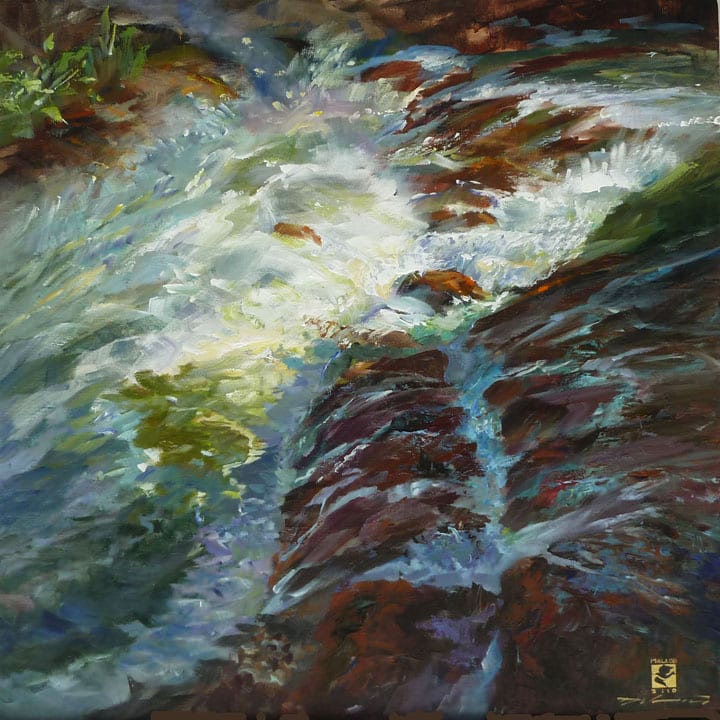
Artworks have the capacity to convey a positive message, to reveal the truth of the unseen, to describe beauty, to define the good that still exists, to communicate between cultures and without spoken language, and to heal. Perhaps that is why occupying armies frequently seek to destroy first the artworks of those they wish to vanquish—to immediately banish beauty, order, and hope in the good from the oppressed.
But each working artist that believes in the power of Art to convey the good is like a Florence Nightingale on the battlefield, among the tents where the wounded lie, going from one victim to the other and ministering to the spirits of those who would otherwise lose hope. Grace and strength will always win out over malice and wickedness. There is power in benevolence, and hope in the sight of the loveliness of a creative spirit. Art that expresses the truth in kindness and gratefulness will disarm the rage, and advance the welfare of all who see it.
As artists, we can do good, and strive to create great artworks. To create at the highest level is a victory over all who would strive to destroy.
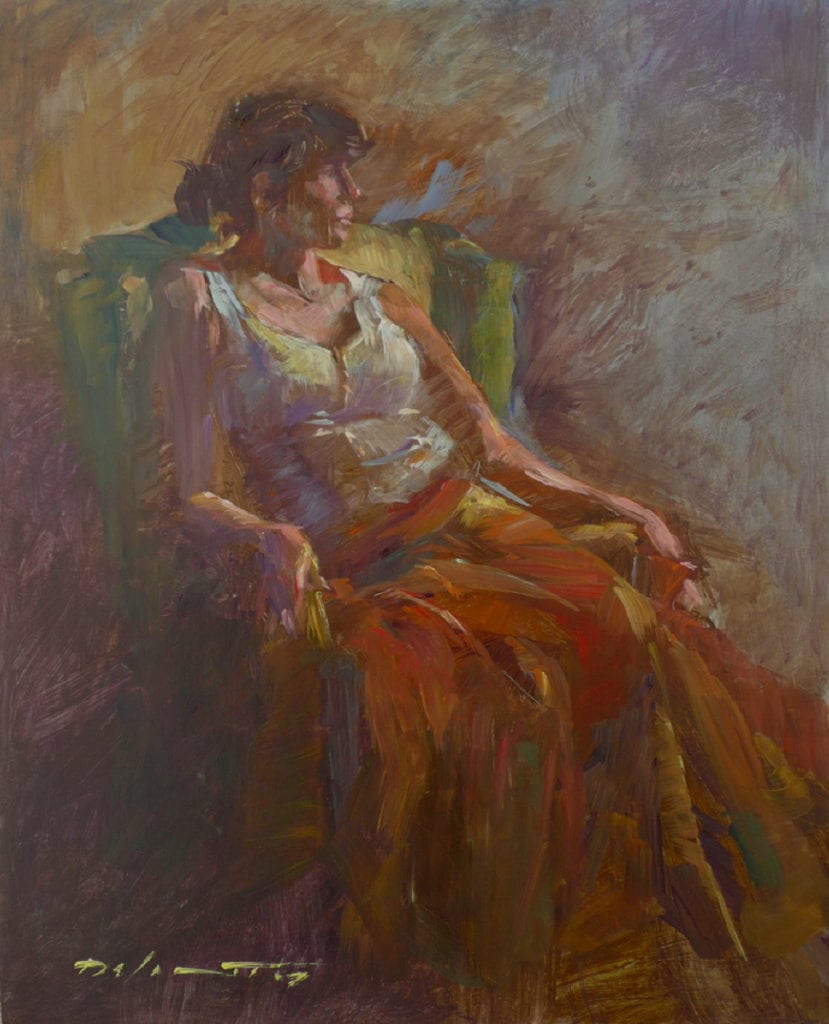
It’s Just Paint and Canvas
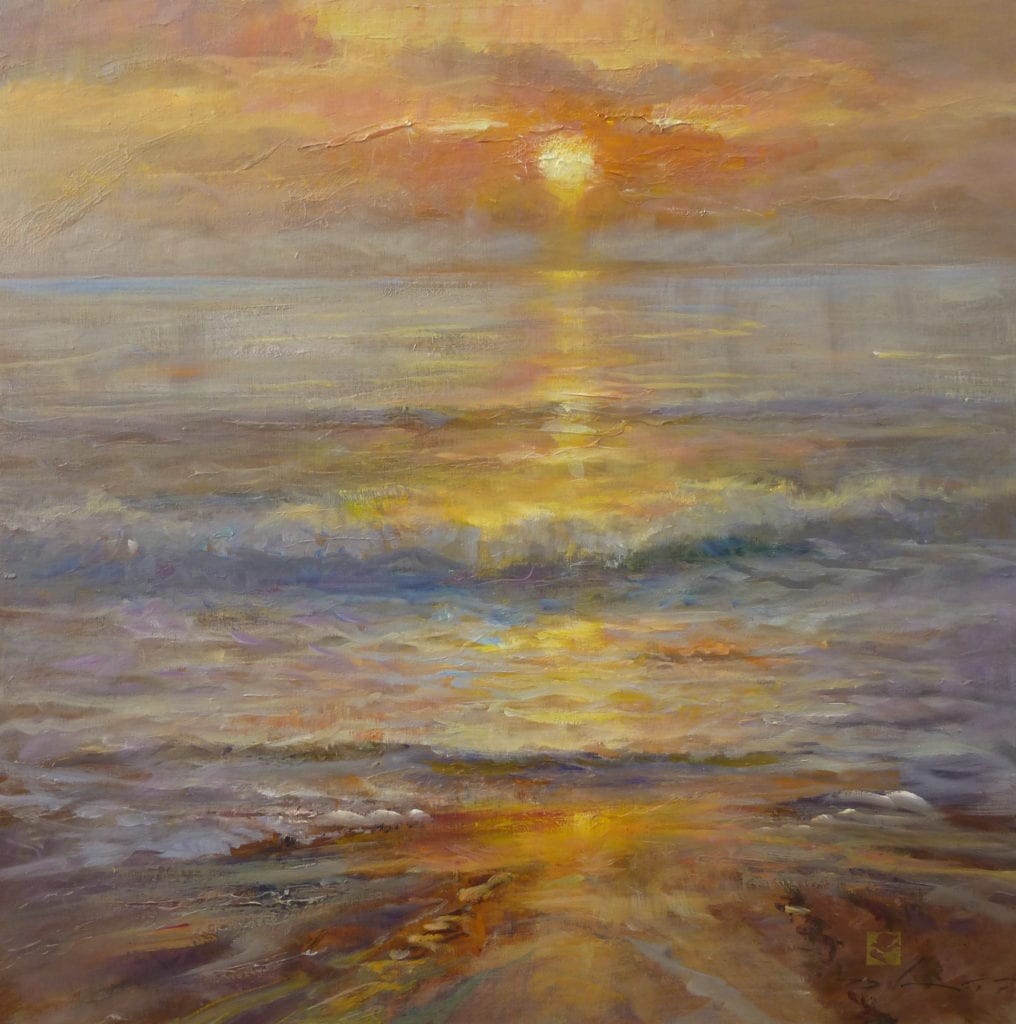
Lines, colors, shapes, usually on a flat rectangular surface: that’s how we most often define “a painting.” As an objet d’art it has perceived value, both inside and out of the marketplace. Often paintings contain little or no moving parts. Precious metals may be employed, but not usually — it’s simply canvas by-the-yard and pigment. The materials of which a painting is made today are not much different than they were thousands of years ago, when early man painted and engraved shapes of animals on cave walls, with crushed plants and vegetable matter for paint, and animal-fat crayons and fingertips for brushes. The technology of paint-making and the variety of painting surfaces have significantly improved since then, but paint is still made of pigments and the surface of a painting is still usually flat. Doesn’t sound that impressive, does it?
“The synthesis of truth and beauty…is the highest and deepest reality.”Ovid
“ We keep our eyes on the things we cannot see: for the things which we can see are temporal; the things that are unseen are eternal.”2 Corinthians 4:18
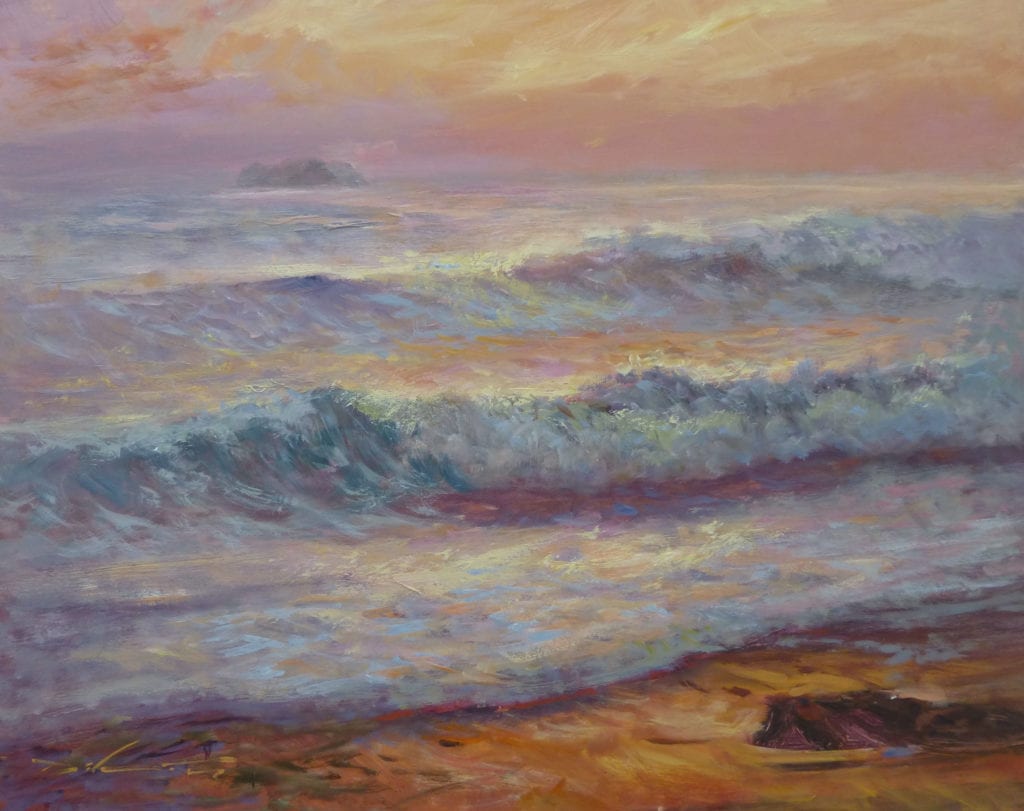
The artist is the catalyst in this process of Imagineering and revelation. It is through the artist’s eye that new possibilities can be discovered, and comprehended. In fact, former President John F. Kennedy underlined that creative significance: “I see little of more importance to the future of our country and of civilization than full recognition of the place of the artist. If art is to nourish the roots of our culture, society must set the artist free to follow his vision wherever it takes him.” The painter does what the director does for a film, or the composer for a symphony. He or she draws unrelated concepts together, instills pattern, variety and unity, and discloses the essence of an idea. If we look through the painter’s lens, we are treated to a new perspective on reality. The visionary artist is a conductor on the journey to an exotic destination. We begin to understand that here is something higher in that artwork, than just paint and canvas.
“An artist is not paid for his labor, but for his vision.”James Abbot McNeill Whistler
For a painting, it is the experience of the artist expressed therein that is of utmost value. The material nature of the work is quite secondary. A painting that conveys the power of emotion to the viewer is more than “just paint and canvas.” It is the description of a heartfelt concept that has been forged into tangible excellence through a creative process of envisioning and technical facility. It even has the power to change lives. “(Art) has the capacity to penetrate even the most callous skin and to ignite a revolution from within,” as musician Benjamin Moore so eloquently reminds us. Pursuing art with our whole hearts and minds is probably the most civilizing undertaking we can do as artists. “What a privilege it is to be able to take brush in hand and put paint on paper in this troubled world,” is our encouragement from artist Veronica Stensby.
A painting’s value is not in its material nature, as “just paint and canvas.” Rather, it is the vision an artist expresses with those materials that is of value: that slice of heaven, the best of the Best, that idea of the Ideal, that is the central core of both the material and spiritual worth of an artwork.
5 Stages of Painting
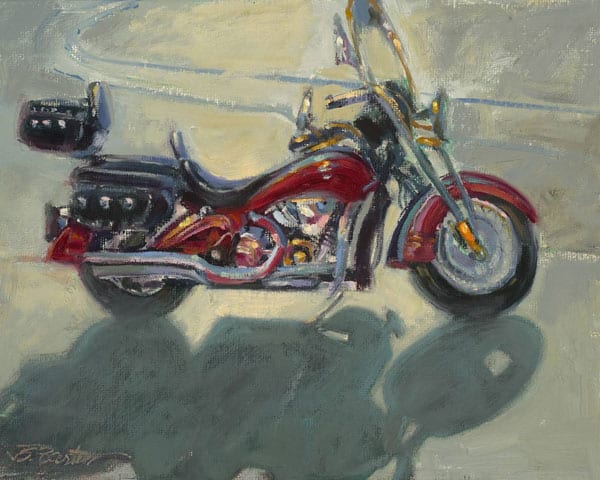
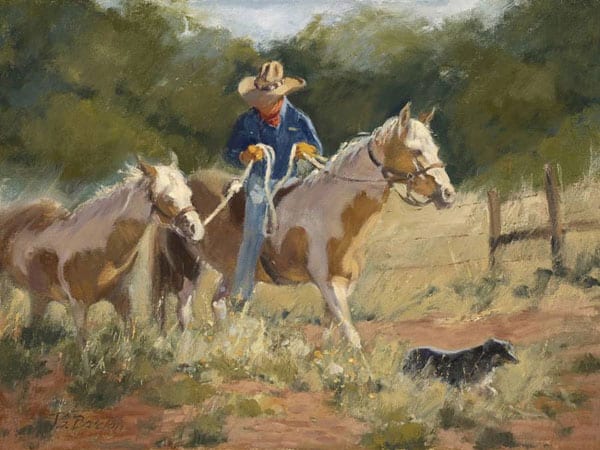
I was teaching in my studio recently and glanced at the bulletin board that I’ve loaded with sketches, ideas and quotes. I had written down the 5 stages of grief at some point and laughed (yes, laughed) at how the same list applies to the work of an artist. If you are an artist I think you’ll be able to relate to this. If you’re a collector, this will give you some idea of how hard our work can be, but you also might find the list applies to your own work, whatever that may be. And, as in life, these stages don’t just run their course and then “you’re done.” They keep repeating. And we keep trying to paint that perfect painting. All artists have a studio full of paintings that will never see the light of a show, but the ones that work make it all worth while!
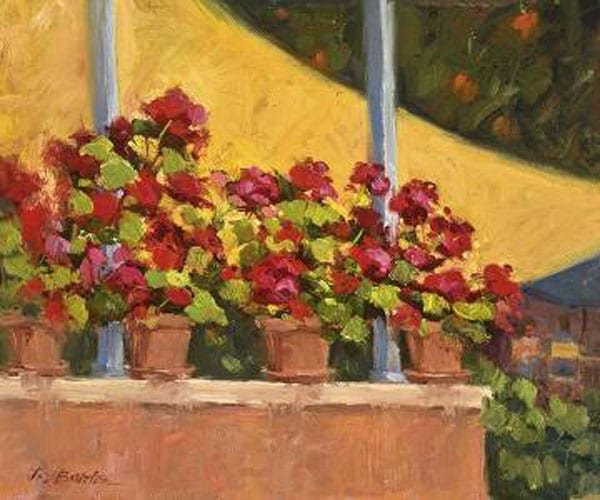
Here’s an idea of what these stages mean to me:
Denial: This is not bad…not the painting I had in my head when I started…but maybe this will work…
Anger: Why isn’t this working? Why can’t I find that color? Why can’t I draw a horse?
Bargaining: OK, if you (the Art God?) just let me get this one painting done in time for the show, I promise I’ll clean up my studio and give up popcorn…and maybe ice cream.
Depression: This is never going to work. What made me think I could paint?
Acceptance: Well, this is not bad. This is going to work for now and the next one will be even better. I hope. I just have to keep working at it and I will get as close as I can before I die.
Repeat 5 stages of Painting. Order may be shuffled as needed.
Good Luck! And don’t give up!